This website is intended for US healthcare professionals only.

INGREZZA clinical patient cases in Huntington’s disease chorea
See results with INGREZZA from the KINECT®-HD pivotal studya
These videos demonstrate the effect of treatment of Huntington’s disease (HD) chorea as seen in the INGREZZA® (valbenazine) capsules phase 3 clinical program.

Leah


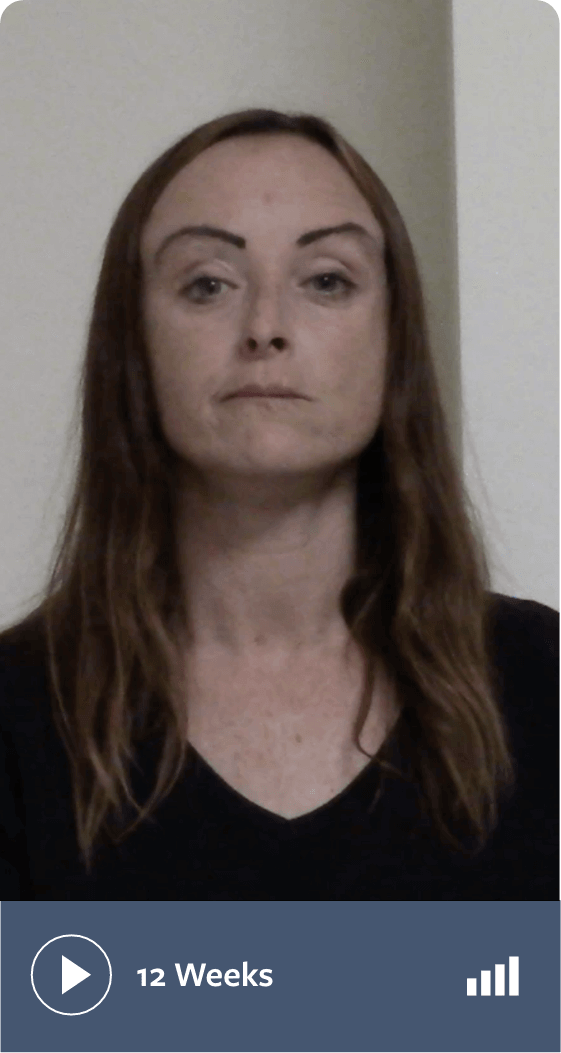
Age:
- 45
CAG repeat length:
- 47
Baseline Total Maximal Chorea (TMC) score:
- 12
INGREZZA treatment resultsb:
- Change in TMC score from Baseline to Week 12: –9
Note: Not all movements may be visible in these videos

Michelle
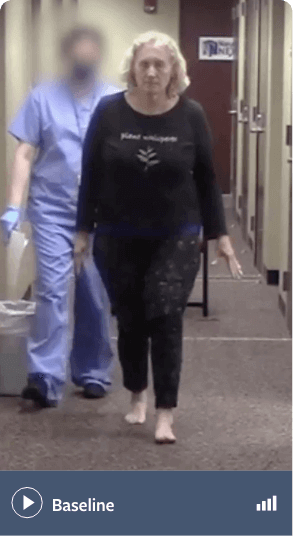
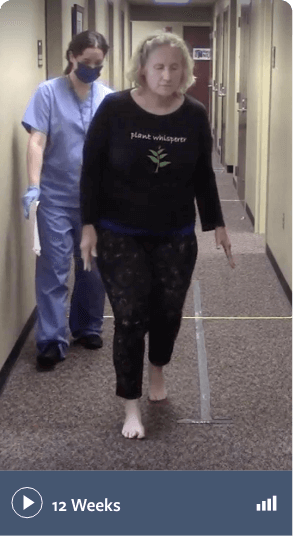
Age:
- 56
CAG repeat length:
- 42
Baseline Total Maximal Chorea (TMC) score:
- 9
INGREZZA treatment resultsb:
- Change in TMC score from Baseline to Week 12: –7.5
Note: Not all movements may be visible in these videos

Mary
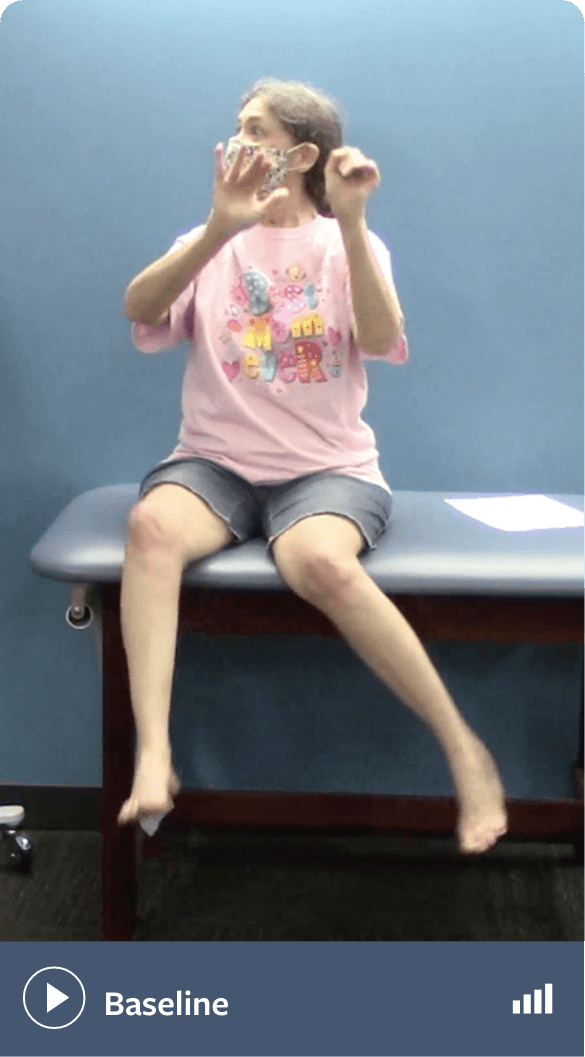
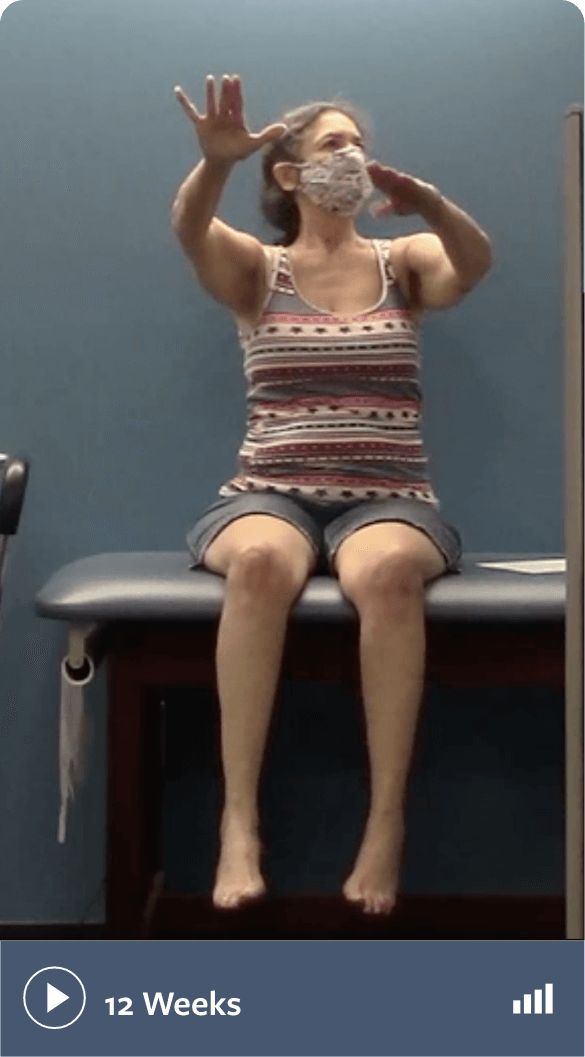
Age:
- 58
CAG repeat length:
- 44
Baseline Total Maximal Chorea (TMC) score:
- 19
INGREZZA treatment resultsb:
- Change in TMC score from Baseline to Week 12: –5
Note: Not all movements may be visible in these videos

Keith
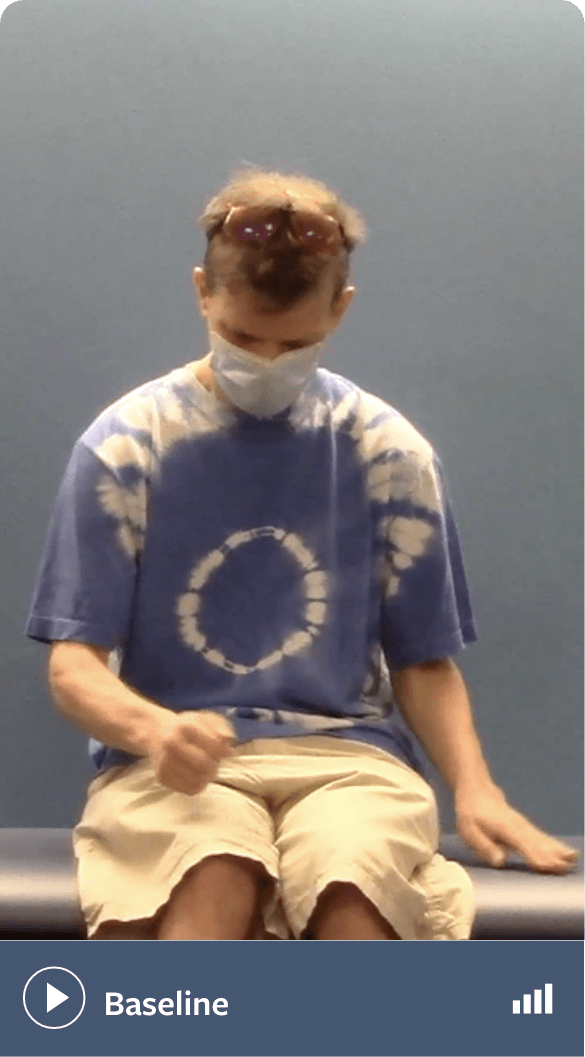
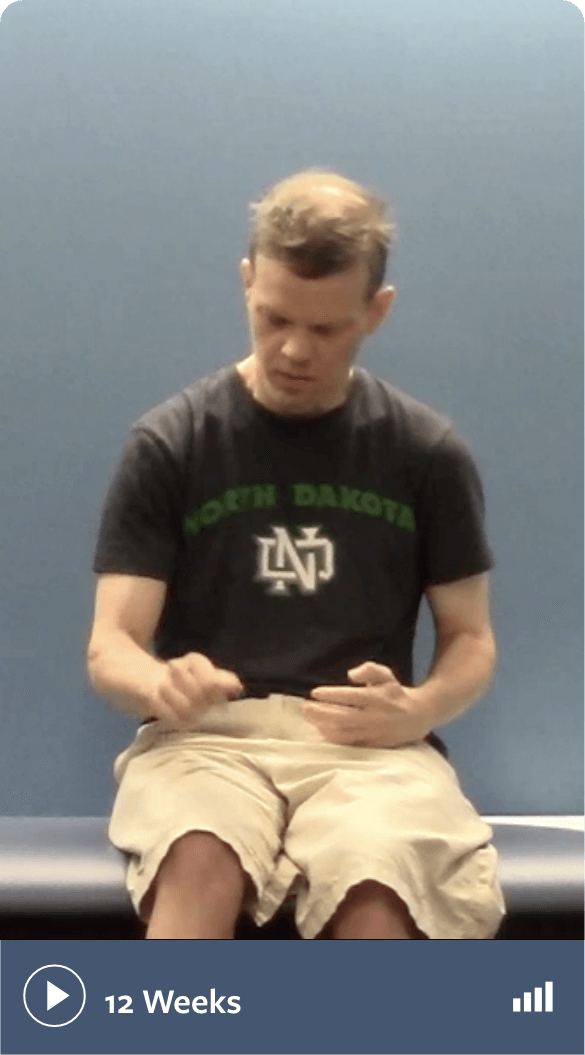
Age:
- 48
CAG repeat length:
- 46
Baseline Total Maximal Chorea (TMC) score:
- 15
INGREZZA treatment resultsb:
- Change in TMC score from Baseline to Week 12: –4
Note: Not all movements may be visible in these videos

Patricia
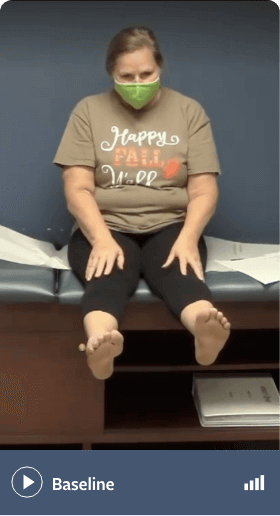
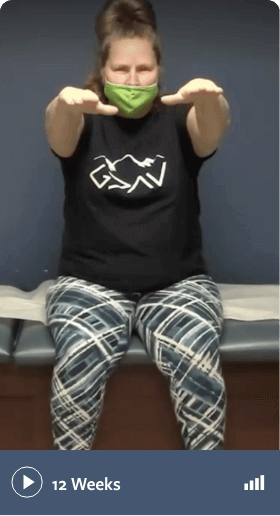
Age:
- 58
CAG repeat length:
- 42
Baseline Total Maximal Chorea (TMC) score:
- 13
INGREZZA treatment resultsb:
- Change in TMC score from Baseline to Week 12: –4
Note: Not all movements may be visible in these videos

Linda
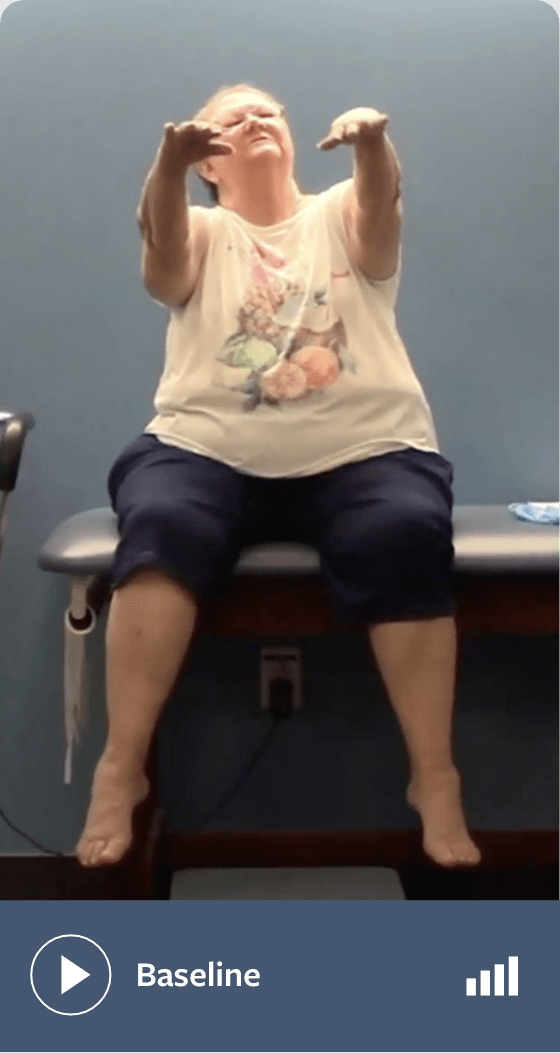
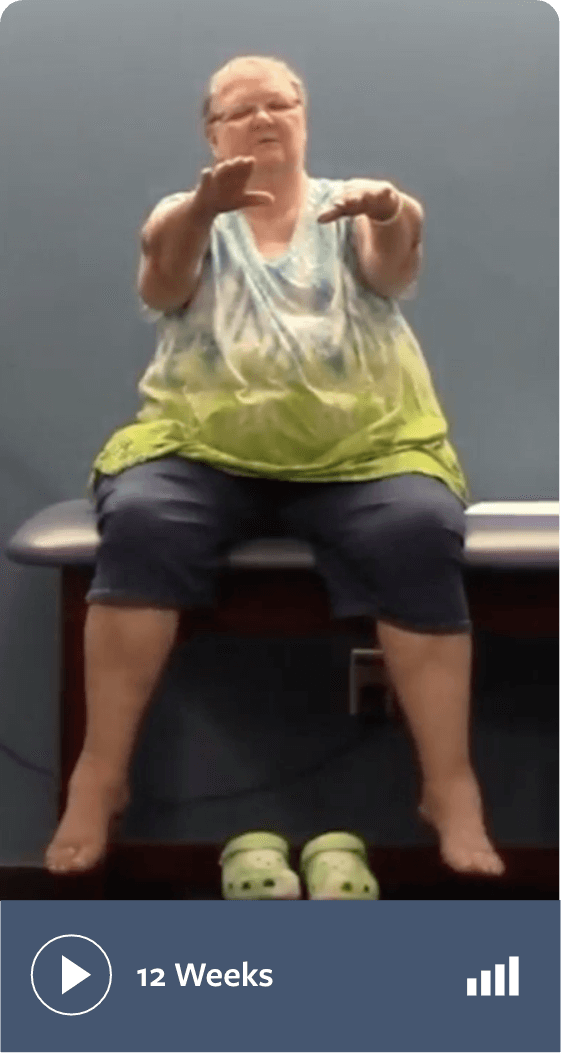
Age:
- 70
CAG repeat length:
- 40
Baseline Total Maximal Chorea (TMC) score:
- 9
INGREZZA treatment resultsb:
- Change in TMC score from Baseline to Week 12: –3
Note: Not all movements may be visible in these videos

Alan
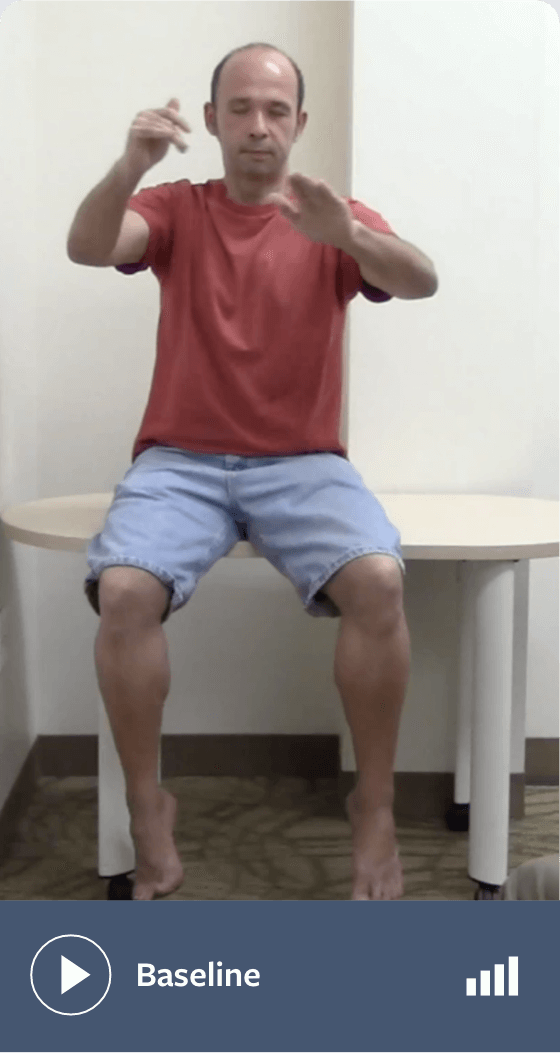
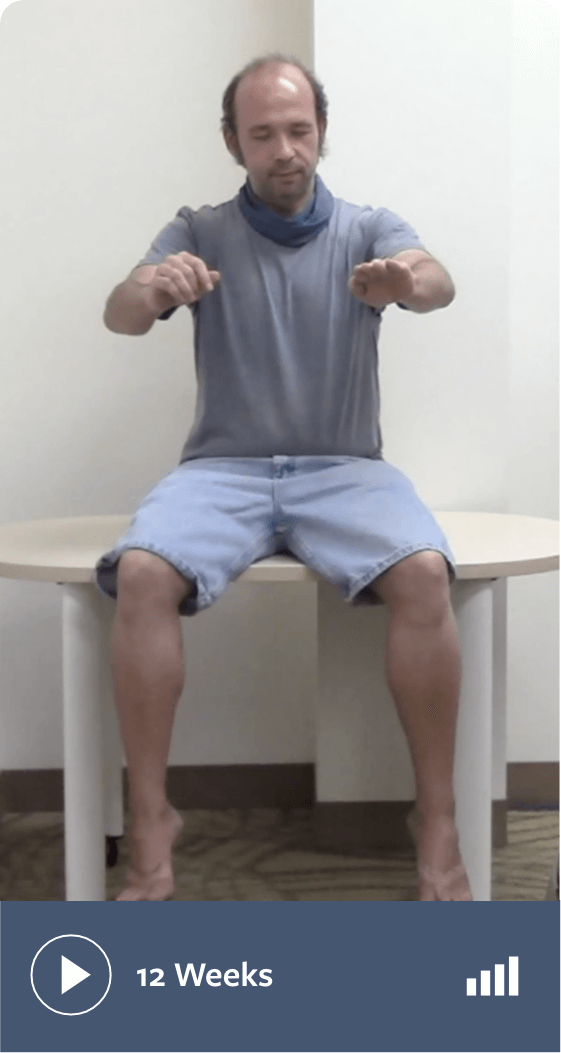
Age:
- 40
CAG repeat length:
- 48
Baseline Total Maximal Chorea (TMC) score:
- 9
INGREZZA treatment resultsb:
- Change in TMC score from Baseline to Week 12: –2
Note: Not all movements may be visible in these videos
These patients provided consent to allow Neurocrine Biosciences to use these videos and their protected health information.
aThe KINECT®-HD pivotal study was a phase 3, randomized, double-blind, placebo-controlled study to evaluate the efficacy, safety, and tolerability of once-daily INGREZZA in subjects with HD chorea. The study included a 4-week screening period, an 8-week dose-adjustment period, a 4-week maintenance period, and a final study visit 2 weeks following the last dose of study drug. If the subject did not tolerate the current dose, the investigator could decrease the subject’s dose at any time during the dose adjustment period, which included Week 8. The primary efficacy endpoint was the change in Total Maximal Chorea score based on on-site assessments from baseline (the average of the screening and Day –1 assessments) to the average of the Week 10 and Week 12 assessments.1
bThis result reflects only the change in TMC score from Baseline to Week 12, which differs from the design of the KINECT®-HD study.
SIMPLE FROM THE START
Only INGREZZA offers a therapeutic dose from Day 11
REVIEW EFFICACY IN HD CHOREA
Explore how INGREZZA reduced HD chorea severity in the KINECT®-HD pivotal study
CONNECT WITH A REPRESENTATIVE
Request an office visit from a Neurocrine representative for additional information, patient resources, or samples of INGREZZA.
References: 1. Furr Stimming E, Claassen DO, Kayson E, et al. Safety and efficacy of valbenazine for the treatment of chorea associated with Huntington’s disease (KINECT®-HD): a phase 3, randomised, double-blind, placebo-controlled trial. Lancet Neurol. 2023;22(6):494-504. 2. INGREZZA [package insert]. San Diego, CA: Neurocrine Biosciences, Inc.
Important Information
INDICATION & USAGE
INGREZZA® (valbenazine) capsules and INGREZZA® SPRINKLE (valbenazine) capsules are indicated in adults for the treatment of tardive dyskinesia and for the treatment of chorea associated with Huntington’s disease.
IMPORTANT SAFETY INFORMATION
Depression and Suicidality in Patients with Huntington’s Disease: VMAT2 inhibitors, including INGREZZA and INGREZZA SPRINKLE, can increase the risk of depression and suicidal thoughts and behavior (suicidality) in patients with Huntington’s disease. Balance the risks of depression and suicidality with the clinical need for treatment of chorea. Closely monitor patients for the emergence or worsening of depression, suicidal ideation, or unusual changes in behavior. Inform patients, their caregivers, and families of the risk of depression and suicidal ideation and behavior and instruct them to report behaviors of concern promptly to the treating physician. Exercise caution when treating patients with a history of depression or prior suicide attempts or ideation, which are increased in frequency in patients with Huntington’s disease.
CONTRAINDICATIONS
INGREZZA and INGREZZA SPRINKLE are contraindicated in patients with a history of hypersensitivity to valbenazine or any components of INGREZZA or INGREZZA SPRINKLE.
WARNINGS & PRECAUTIONS
Hypersensitivity Reactions
Hypersensitivity reactions, including cases of angioedema involving the larynx, glottis, lips, and eyelids, have been reported in patients after taking the first or subsequent doses of INGREZZA. Angioedema associated with laryngeal edema can be fatal. If any of these reactions occur, discontinue INGREZZA or INGREZZA SPRINKLE.
Somnolence and Sedation
INGREZZA and INGREZZA SPRINKLE can cause somnolence and sedation. Patients should not perform activities requiring mental alertness such as operating a motor vehicle or operating hazardous machinery until they know how they will be affected by INGREZZA or INGREZZA SPRINKLE.
QT Prolongation
INGREZZA and INGREZZA SPRINKLE may prolong the QT interval, although the degree of QT prolongation is not clinically significant at concentrations expected with recommended dosing. INGREZZA and INGREZZA SPRINKLE should be avoided in patients with congenital long QT syndrome or with arrhythmias associated with a prolonged QT interval. For patients at increased risk of a prolonged QT interval, assess the QT interval before increasing the dosage.
Neuroleptic Malignant Syndrome
A potentially fatal symptom complex referred to as Neuroleptic Malignant Syndrome (NMS) has been reported in association with drugs that reduce dopaminergic transmission, including INGREZZA. The management of NMS should include immediate discontinuation of INGREZZA or INGREZZA SPRINKLE, intensive symptomatic treatment and medical monitoring, and treatment of any concomitant serious medical problems. If treatment with INGREZZA or INGREZZA SPRINKLE is needed after recovery from NMS, patients should be monitored for signs of recurrence.
Parkinsonism
INGREZZA and INGREZZA SPRINKLE may cause parkinsonism. Parkinsonism has also been observed with other VMAT2 inhibitors. Reduce the dose or discontinue INGREZZA or INGREZZA SPRINKLE treatment in patients who develop clinically significant parkinson-like signs or symptoms.
ADVERSE REACTIONS
The most common adverse reaction in patients with tardive dyskinesia (≥5% and twice the rate of placebo) is somnolence.
The most common adverse reactions in patients with chorea associated with Huntington’s disease (≥5% and twice the rate of placebo) are somnolence/lethargy/sedation, urticaria, rash, and insomnia.
You are encouraged to report negative side effects of prescription drugs to the FDA. Visit MedWatch at www.fda.gov/medwatch or call 1‑800‑FDA‑1088.
Dosage Forms and Strengths: INGREZZA and INGREZZA SPRINKLE are available in 40 mg, 60 mg, and 80 mg capsules.
Please see full Prescribing Information, including Boxed Warning.
Important Information
INDICATION & USAGE
INGREZZA® (valbenazine) capsules and INGREZZA® SPRINKLE (valbenazine) capsules are indicated in adults for the treatment of tardive dyskinesia and for the treatment of chorea associated with Huntington’s disease.
Important Safety Information
Depression and Suicidality in Patients with Huntington’s Disease: VMAT2 inhibitors, including INGREZZA, can increase the risk of depression and suicidal thoughts and
Depression and Suicidality in Patients with Huntington’s Disease: VMAT2 inhibitors, including INGREZZA and INGREZZA SPRINKLE, can increase the risk of depression and suicidal thoughts and behavior (suicidality) in patients with Huntington’s disease. Balance the risks of depression and suicidality with the clinical need for treatment of chorea. Closely monitor patients for the emergence or worsening of depression, suicidal ideation, or unusual changes in behavior. Inform patients, their caregivers, and families of the risk of depression and suicidal ideation and behavior and instruct them to report behaviors of concern promptly to the treating physician. Exercise caution when treating patients with a history of depression or prior suicide attempts or ideation, which are increased in frequency in patients with Huntington’s disease.