This website is intended for US healthcare professionals only.

Patient-reported outcomes in tardive dyskinesia

KINECT-PRO: A Landmark, Phase 4, Open-Label Study1
- KINECT-PRO is the first study to evaluate TD impact and burden using multiple validated patient-reported outcome measures; data shown here are for one of these measures (Tardive Dyskinesia Impact Scale™, or TDIS™)
- This study was a phase 4, open-label, single-arm, interventional, prospective study of patients without use of a VMAT2 inhibitor within the last month.
- Included 59 patients with schizophrenia, schizoaffective disorder, or mood disorder and at least mild TD*
- Patients were started on INGREZZA® (valbenazine) capsules 40 mg for 4 weeks and could be adjusted based on patient needs (40, 60, or 80 mg) afterward for a total of 24 weeks of treatment
*Measured by AIMS Item 8 (global severity) score ≥2.
The Tardive Dyskinesia Impact Scale (TDIS™) is the only PRO measure specifically designed for and validated in TD patients2
The TDIS™ is an 11-item questionnaire to evaluate how TD affects a patient's daily functioning over the past 7 days. Each question is scored on a 5-point scale from 0 (no impact) to 4 (most impact), resulting in a score of 0 to 44.


Learn more about the validation of the Tardive Dyskinesia Impact Scale (TDIS™)
The VMAT2 inhibitor with clinically meaningful improvements in patient-reported TD impact1
As measured by the Tardive Dyskinesia Impact Scale (TDIS™)
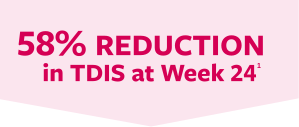
Mean change in TDIS™ from baseline to Week 241

See reductions by TDIS™ items
Reductions in TD impact were reported regardless of baseline severity of underlying diagnosis1
As measured by the TDIS™
TD Impact Scale (TDIS™) score percentage reductions in subgroups at Week 241

Data analyses were at Week 24 vs baseline. Results are descriptive. No prespecified inferential statistical testing was conducted.
Simple from the start
Only INGREZZA offers a therapeutic dose from Day 13
See real-world results with INGREZZA
View videos of real-world patients with TD treated with INGREZZA
INGREZZA Clinical Safety Data
INGREZZA was studied across a broad range of TD patients
References: 1. Data on file. Neurocrine Biosciences, Inc. 2. Farber RH, Stull DE, Witherspoon B, et al. The Tardive Dyskinesia Impact Scale (TDIS), a novel patient-reported outcome measure in tardive dyskinesia: development and psychometric validation. J Patient Rep Outcomes. 2024;8(1):2. 3. INGREZZA [package insert]. San Diego, CA: Neurocrine Biosciences, Inc.
Important Information
INDICATION & USAGE
INGREZZA® (valbenazine) capsules and INGREZZA® SPRINKLE (valbenazine) capsules are indicated in adults for the treatment of tardive dyskinesia and for the treatment of chorea associated with Huntington’s disease.
IMPORTANT SAFETY INFORMATION
Depression and Suicidality in Patients with Huntington’s Disease: VMAT2 inhibitors, including INGREZZA and INGREZZA SPRINKLE, can increase the risk of depression and suicidal thoughts and behavior (suicidality) in patients with Huntington’s disease. Balance the risks of depression and suicidality with the clinical need for treatment of chorea. Closely monitor patients for the emergence or worsening of depression, suicidal ideation, or unusual changes in behavior. Inform patients, their caregivers, and families of the risk of depression and suicidal ideation and behavior and instruct them to report behaviors of concern promptly to the treating physician. Exercise caution when treating patients with a history of depression or prior suicide attempts or ideation, which are increased in frequency in patients with Huntington’s disease.
CONTRAINDICATIONS
INGREZZA and INGREZZA SPRINKLE are contraindicated in patients with a history of hypersensitivity to valbenazine or any components of INGREZZA or INGREZZA SPRINKLE.
WARNINGS & PRECAUTIONS
Hypersensitivity Reactions
Hypersensitivity reactions, including cases of angioedema involving the larynx, glottis, lips, and eyelids, have been reported in patients after taking the first or subsequent doses of INGREZZA. Angioedema associated with laryngeal edema can be fatal. If any of these reactions occur, discontinue INGREZZA or INGREZZA SPRINKLE.
Somnolence and Sedation
INGREZZA and INGREZZA SPRINKLE can cause somnolence and sedation. Patients should not perform activities requiring mental alertness such as operating a motor vehicle or operating hazardous machinery until they know how they will be affected by INGREZZA or INGREZZA SPRINKLE.
QT Prolongation
INGREZZA and INGREZZA SPRINKLE may prolong the QT interval, although the degree of QT prolongation is not clinically significant at concentrations expected with recommended dosing. INGREZZA and INGREZZA SPRINKLE should be avoided in patients with congenital long QT syndrome or with arrhythmias associated with a prolonged QT interval. For patients at increased risk of a prolonged QT interval, assess the QT interval before increasing the dosage.
Neuroleptic Malignant Syndrome
A potentially fatal symptom complex referred to as Neuroleptic Malignant Syndrome (NMS) has been reported in association with drugs that reduce dopaminergic transmission, including INGREZZA. The management of NMS should include immediate discontinuation of INGREZZA or INGREZZA SPRINKLE, intensive symptomatic treatment and medical monitoring, and treatment of any concomitant serious medical problems. If treatment with INGREZZA or INGREZZA SPRINKLE is needed after recovery from NMS, patients should be monitored for signs of recurrence.
Parkinsonism
INGREZZA and INGREZZA SPRINKLE may cause parkinsonism. Parkinsonism has also been observed with other VMAT2 inhibitors. Reduce the dose or discontinue INGREZZA or INGREZZA SPRINKLE treatment in patients who develop clinically significant parkinson-like signs or symptoms.
ADVERSE REACTIONS
The most common adverse reaction in patients with tardive dyskinesia (≥5% and twice the rate of placebo) is somnolence.
The most common adverse reactions in patients with chorea associated with Huntington’s disease (≥5% and twice the rate of placebo) are somnolence/lethargy/sedation, urticaria, rash, and insomnia.
You are encouraged to report negative side effects of prescription drugs to the FDA. Visit MedWatch at www.fda.gov/medwatch or call 1‑800‑FDA‑1088.
Dosage Forms and Strengths: INGREZZA and INGREZZA SPRINKLE are available in 40 mg, 60 mg, and 80 mg capsules.
Please see full Prescribing Information, including Boxed Warning.
Important Information
INDICATION & USAGE
INGREZZA® (valbenazine) capsules and INGREZZA® SPRINKLE (valbenazine) capsules are indicated in adults for the treatment of tardive dyskinesia and for the treatment of chorea associated with Huntington’s disease.
Important Safety Information
Depression and Suicidality in Patients with Huntington’s Disease: VMAT2 inhibitors, including INGREZZA, can increase the risk of depression and suicidal thoughts and
Depression and Suicidality in Patients with Huntington’s Disease: VMAT2 inhibitors, including INGREZZA and INGREZZA SPRINKLE, can increase the risk of depression and suicidal thoughts and behavior (suicidality) in patients with Huntington’s disease. Balance the risks of depression and suicidality with the clinical need for treatment of chorea. Closely monitor patients for the emergence or worsening of depression, suicidal ideation, or unusual changes in behavior. Inform patients, their caregivers, and families of the risk of depression and suicidal ideation and behavior and instruct them to report behaviors of concern promptly to the treating physician. Exercise caution when treating patients with a history of depression or prior suicide attempts or ideation, which are increased in frequency in patients with Huntington’s disease.