This website is intended for US healthcare professionals only.

Tardive dyskinesia assessment and diagnosis
Make screening a part of your routine for all patients on antipsychotics
2020 American Psychiatric Association guidelines recommend1:
- 1
Screening for TD before starting or changing patients’ dopamine receptor blocking agent (DRBA) treatment
- 2
Monitoring for signs of TD at each visit
- 3
Conducting a structured TD assessment every 6 to 12 months, depending on patient’s risk, and if new or worsening movements are detected at any visit
The involuntary and uncontrollable movements from TD may not only impact your patients physically, but also emotionally2
When assessing the signs of tardive dyskinesia, ask about how it is affecting their everyday lives.
Tardive dyskinesia (TD) doesn’t just present in the face and mouth—involuntary movements may impact upper and lower limbs, the neck, and trunk3,4
UPPER LIMBS
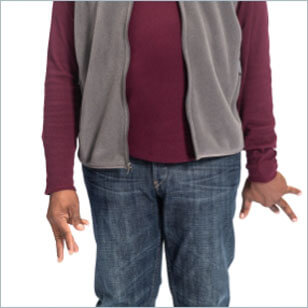
Asymmetrical movements, swaying, “piano fingers,” grabbing of clothing3,4
LOWER LIMBS
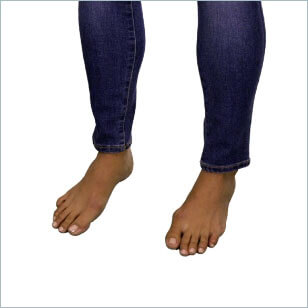
Splayed or hyperextended toes, gripping, ankle twisting3,4
TORSO

Hyperextension, shifting, rocking3,4
TONGUE

“Bonbon” sign, protrusion, darting3,4
EYES

Excessive blinking and squinting3,4
LIPS

Smacking, puckering, pursing3,4
JAW

Biting, clenching, lateral movements, chewing3,4
Actor portrayals

Take the TD Challenge: Assessment and diagnosis
Can you differentiate tardive dyskinesia from drug-induced parkinsonism and other acute drug-induced movement disorders? Put your knowledge to the test.

EXPERT PERSPECTIVES:
Tardive dyskinesia (TD) is clinically distinct
Dr. Laxman Bahroo, from Georgetown University’s Neurology Department, discusses the clinical distinctions between TD and acute drug-induced movement disorders and what to look for.
PATIENT-REPORTED OUTCOMES WITH INGREZZA
The first and only VMAT2 inhibitor to demonstrate clinically meaningful reductions in patient-reported TD impact6
TREAT FIRST LINE WITH VMAT2 INHIBITORS
VMAT2 inhibitors, like INGREZZA® (valbenazine) capsules, are recommended as first-line treatment for TD1,7,8
SEE REAL-WORLD RESULTS WITH INGREZZA
View videos of real-world patients with TD treated with INGREZZA
Tips for discussing the impacts of TD with your patients
Consider asking targeted questions specific to TD and the areas of the body it can affect:
- Have you noticed any uncontrolled movements in your face, mouth, tongue, arms, and/or legs?
- Have you had trouble with eating, preparing meals, walking, or exercising?
- Have you had any difficulty with talking, breathing, writing, or typing?
The involuntary and uncontrollable movements from tardive dyskinesia may not only impact your patients physically, but also emotionally.
When assessing the signs of tardive dyskinesia, ask about how it is affecting their everyday lives:
- When you first became aware of these movements, what did you think about them?
- Do your movements make you feel embarrassed or self-conscious?
- If so, how? Do your movements make you feel anxious about going out in public?
- Have other people noticed your movements? If so, what did they say?
- How has your work, social life, or daily routine changed because of your movements?
- Are there activities that you avoid or that you’re unable to do because of your movements?
Take the TD Challenge: Assessment and diagnosis

Question 1 of 5
TRUE OR FALSE:
The movements in this video show tardive dyskinesia (TD).
Actor portrayal
THE CORRECT RESPONSE IS FALSE.
These are parkinsonian jaw tremors.
Parkinsonian jaw tremors are characterized as rhythmic jaw movements that can be of high amplitude.1-3
In contrast, jaw movements associated with TD may include biting, clenching, and lateral jaw movements.2,4
ASSESSMENT TIP
Ask patients to remove any gum or candy before assessing for TD movements.5
REFERENCES: 1. Task Force on Tardive Dyskinesia. Tardive Dyskinesia: A Task Force Report of the American Psychiatric Association. Washington, DC: American Psychiatric Association; 1992. 2. American Psychiatric Association. Diagnostic and Statistical Manual of Mental Disorders. 5th ed. Arlington, VA: American Psychiatric Association; 2013. 3. Gupta R, Bhatia MS. Drug induced parkinsonism presenting as isolated jaw tremors. Online J Health Allied Scs. 2005;4(3):1-3. 4. Guy W. ECDEU Assessment Manual for Psychopharmacology. Revised 1976. Rockville, MD: National Institute of Mental Health; 1976. 5. Munetz MR, Benjamin S. How to examine patients using the Abnormal Involuntary Movement Scale. Hosp Community Psychiatry. 1988;39(11):1172-1177.
Question 2 of 5
TRUE OR FALSE:
The movements in this video show tardive dyskinesia (TD).
Actor portrayal
THE CORRECT RESPONSE IS TRUE.
This is TD.
Lower-limb movements associated with TD may include splayed or hyperextended toes, gripping, and ankle twisting.1-3
These movements can be more challenging to recognize than TD movements of the face and mouth.1
ASSESSMENT TIP
To help identify lower-limb movements associated with TD, ask patients to remove their shoes and socks before you begin the assessment.4,5
REFERENCES: 1. Task Force on Tardive Dyskinesia. Tardive Dyskinesia: A Task Force Report of the American Psychiatric Association. Washington, DC: American Psychiatric Association; 1992. 2. American Psychiatric Association. Diagnostic and Statistical Manual of Mental Disorders. 5th ed. Arlington, VA: American Psychiatric Association; 2013. 3. Guy W. ECDEU Assessment Manual for Psychopharmacology. Revised 1976. Rockville, MD: National Institute of Mental Health; 1976. 4. Munetz MR, Benjamin S. How to examine patients using the Abnormal Involuntary Movement Scale. Hosp Community Psychiatry. 1988;39(11):1172-1177. 5. Saltz BL, Robinson DG, Woerner MG. Recognizing and managing antipsychotic drug treatment side effects in the elderly. Prim Care Companion J Clin Psychiatry. 2004;6(2):14-19.
Question 3 of 5
TRUE OR FALSE:
Tardive dyskinesia (TD) and acute drug-induced movement disorders (eg, drug-induced parkinsonism) never coexist.
THE CORRECT RESPONSE IS FALSE.
TD and acute drug-induced movement disorders (DIMDs) may coexist as different and distinct DIMDs, each requiring specific identification and management.1-3
ASSESSMENT TIP
It is important to consider the time between the initiation of antipsychotic treatment and the onset of involuntary movements to differentiate TD from acute DIMDs.4
REFERENCES: 1. Task Force on Tardive Dyskinesia. Tardive Dyskinesia: A Task Force Report of the American Psychiatric Association. Washington, DC: American Psychiatric Association; 1992. 2. Caroff SN, Hurford I, Lybrand J, et al. Movement disorders induced by antipsychotic drugs: implications of the CATIE schizophrenia trial. Neurol Clin. 2011;29(1):127-148. 3. Guy W. ECDEU Assessment Manual for Psychopharmacology. Revised 1976. Rockville, MD: National Institute of Mental Health; 1976. 4. American Psychiatric Association. Diagnostic and Statistical Manual of Mental Disorders. 5th ed. Arlington, VA: American Psychiatric Association; 2013.
Question 4 of 5
TRUE OR FALSE:
The movements in this video show tardive dyskinesia (TD).
Actor portrayal
THE CORRECT RESPONSE IS FALSE.
These are parkinsonian hand tremors.
Parkinsonian hand tremors are characterized as rhythmic movements that can be of high amplitude and typically occur when the patient is at rest.1-4
TD hand movements may include grabbing of clothing and “piano fingers.”1,2,5
ASSESSMENT TIP
Activation techniques, such as asking patients to tap their thumb to another finger rapidly for 15 seconds, can help identify suppressed TD movements.6
REFERENCES: 1. Task Force on Tardive Dyskinesia. Tardive Dyskinesia: A Task Force Report of the American Psychiatric Association. Washington, DC: American Psychiatric Association; 1992. 2. American Psychiatric Association. Diagnostic and Statistical Manual of Mental Disorders. 5th ed. Arlington, VA: American Psychiatric Association; 2013. 3. Saltz BL, Robinson DG, Woerner MG. Recognizing and managing antipsychotic drug treatment side effects in the elderly. Prim Care Companion J Clin Psychiatry. 2004;6(2):14-19. 4. Thenganatt MA, Louis ED. Distinguishing essential tremor from Parkinson’s disease: bedside tests and laboratory evaluations. Expert Rev Neurother. 2012;12(6):687-696. 5. Guy W. ECDEU Assessment Manual for Psychopharmacology. Revised 1976. Rockville, MD: National Institute of Mental Health; 1976. 6. Munetz MR, Benjamin S. How to examine patients using the Abnormal Involuntary Movement Scale. Hosp Community Psychiatry. 1988;39(11):1172-1177.
Question 5 of 5
TRUE OR FALSE:
The movements in this video show tardive dyskinesia (TD).
Actor portrayal
THE CORRECT RESPONSE IS TRUE.
This is TD.
Movements of the eyes and face associated with TD may include excessive blinking and squinting.1-3
ASSESSMENT TIP
Remember, TD may affect more than one area of the body—not just the face. A comprehensive full body assessment may help you identify abnormal involuntary movements.1-3
REFERENCES: 1. Task Force on Tardive Dyskinesia. Tardive Dyskinesia: A Task Force Report of the American Psychiatric Association. Washington, DC: American Psychiatric Association; 1992. 2. American Psychiatric Association. Diagnostic and Statistical Manual of Mental Disorders. 5th ed. Arlington, VA: American Psychiatric Association; 2013. 3. Guy W. ECDEU Assessment Manual for Psychopharmacology. Revised 1976. Rockville, MD: National Institute of Mental Health; 1976.
You’ve completed the TD Challenge:
Assessment and diagnosis
Continue on to learn more about the efficacy of INGREZZA® (valbenazine) capsules in patients with TD
References: 1. Keepers GA, Fochtmann LJ, Anzia JM, et al. The American Psychiatric Association Practice Guideline for the Treatment of Patients With Schizophrenia. 3rd ed. American Psychiatric Association Publishing, 2020. 2. McEvoy J, Gandhi SK, Rizio AA, et al. Effect of tardive dyskinesia on quality of life in patients with bipolar disorder, major depressive disorder, and schizophrenia. Qual Life Res. 2019;28(12):3303-3312. 3. Guy W. ECDEU Assessment Manual for Psychopharmacology. Revised 1976. Rockville, MD: National Institute of Mental Health; 1976. 4. American Psychiatric Association. Diagnostic and Statistical Manual of Mental Disorders. 5th ed. Arlington, VA: American Psychiatric Association; 2013. 5. Task Force on Tardive Dyskinesia. Tardive Dyskinesia: A Task Force Report of the American Psychiatric Association. Washington, DC: American Psychiatric Association; 1992. 6. Data on file. Neurocrine Biosciences, Inc. 7. Bhidayasiri R, Jitkritsadakul O, Friedman JH, Fahn S. Updating the recommendations for treatment of tardive syndromes: a systematic review of new evidence and practical treatment algorithm. J Neurol Sci. 2018;389:67-75. 8. Caroff SN, Citrome L, Meyer J, et al. A modified Delphi consensus study of the screening, diagnosis, and treatment of tardive dyskinesia. J Clin Psychiatry. 2020;81(2):19cs12983.
Important Information
INDICATION & USAGE
INGREZZA® (valbenazine) capsules and INGREZZA® SPRINKLE (valbenazine) capsules are indicated in adults for the treatment of tardive dyskinesia and for the treatment of chorea associated with Huntington’s disease.
IMPORTANT SAFETY INFORMATION
Depression and Suicidality in Patients with Huntington’s Disease: VMAT2 inhibitors, including INGREZZA and INGREZZA SPRINKLE, can increase the risk of depression and suicidal thoughts and behavior (suicidality) in patients with Huntington’s disease. Balance the risks of depression and suicidality with the clinical need for treatment of chorea. Closely monitor patients for the emergence or worsening of depression, suicidal ideation, or unusual changes in behavior. Inform patients, their caregivers, and families of the risk of depression and suicidal ideation and behavior and instruct them to report behaviors of concern promptly to the treating physician. Exercise caution when treating patients with a history of depression or prior suicide attempts or ideation, which are increased in frequency in patients with Huntington’s disease.
CONTRAINDICATIONS
INGREZZA and INGREZZA SPRINKLE are contraindicated in patients with a history of hypersensitivity to valbenazine or any components of INGREZZA or INGREZZA SPRINKLE.
WARNINGS & PRECAUTIONS
Hypersensitivity Reactions
Hypersensitivity reactions, including cases of angioedema involving the larynx, glottis, lips, and eyelids, have been reported in patients after taking the first or subsequent doses of INGREZZA. Angioedema associated with laryngeal edema can be fatal. If any of these reactions occur, discontinue INGREZZA or INGREZZA SPRINKLE.
Somnolence and Sedation
INGREZZA and INGREZZA SPRINKLE can cause somnolence and sedation. Patients should not perform activities requiring mental alertness such as operating a motor vehicle or operating hazardous machinery until they know how they will be affected by INGREZZA or INGREZZA SPRINKLE.
QT Prolongation
INGREZZA and INGREZZA SPRINKLE may prolong the QT interval, although the degree of QT prolongation is not clinically significant at concentrations expected with recommended dosing. INGREZZA and INGREZZA SPRINKLE should be avoided in patients with congenital long QT syndrome or with arrhythmias associated with a prolonged QT interval. For patients at increased risk of a prolonged QT interval, assess the QT interval before increasing the dosage.
Neuroleptic Malignant Syndrome
A potentially fatal symptom complex referred to as Neuroleptic Malignant Syndrome (NMS) has been reported in association with drugs that reduce dopaminergic transmission, including INGREZZA. The management of NMS should include immediate discontinuation of INGREZZA or INGREZZA SPRINKLE, intensive symptomatic treatment and medical monitoring, and treatment of any concomitant serious medical problems. If treatment with INGREZZA or INGREZZA SPRINKLE is needed after recovery from NMS, patients should be monitored for signs of recurrence.
Parkinsonism
INGREZZA and INGREZZA SPRINKLE may cause parkinsonism. Parkinsonism has also been observed with other VMAT2 inhibitors. Reduce the dose or discontinue INGREZZA or INGREZZA SPRINKLE treatment in patients who develop clinically significant parkinson-like signs or symptoms.
ADVERSE REACTIONS
The most common adverse reaction in patients with tardive dyskinesia (≥5% and twice the rate of placebo) is somnolence.
The most common adverse reactions in patients with chorea associated with Huntington’s disease (≥5% and twice the rate of placebo) are somnolence/lethargy/sedation, urticaria, rash, and insomnia.
You are encouraged to report negative side effects of prescription drugs to the FDA. Visit MedWatch at www.fda.gov/medwatch or call 1‑800‑FDA‑1088.
Dosage Forms and Strengths: INGREZZA and INGREZZA SPRINKLE are available in 40 mg, 60 mg, and 80 mg capsules.
Please see full Prescribing Information, including Boxed Warning.
Important Information
INDICATION & USAGE
INGREZZA® (valbenazine) capsules and INGREZZA® SPRINKLE (valbenazine) capsules are indicated in adults for the treatment of tardive dyskinesia and for the treatment of chorea associated with Huntington’s disease.
Important Safety Information
Depression and Suicidality in Patients with Huntington’s Disease: VMAT2 inhibitors, including INGREZZA, can increase the risk of depression and suicidal thoughts and
Depression and Suicidality in Patients with Huntington’s Disease: VMAT2 inhibitors, including INGREZZA and INGREZZA SPRINKLE, can increase the risk of depression and suicidal thoughts and behavior (suicidality) in patients with Huntington’s disease. Balance the risks of depression and suicidality with the clinical need for treatment of chorea. Closely monitor patients for the emergence or worsening of depression, suicidal ideation, or unusual changes in behavior. Inform patients, their caregivers, and families of the risk of depression and suicidal ideation and behavior and instruct them to report behaviors of concern promptly to the treating physician. Exercise caution when treating patients with a history of depression or prior suicide attempts or ideation, which are increased in frequency in patients with Huntington’s disease.